
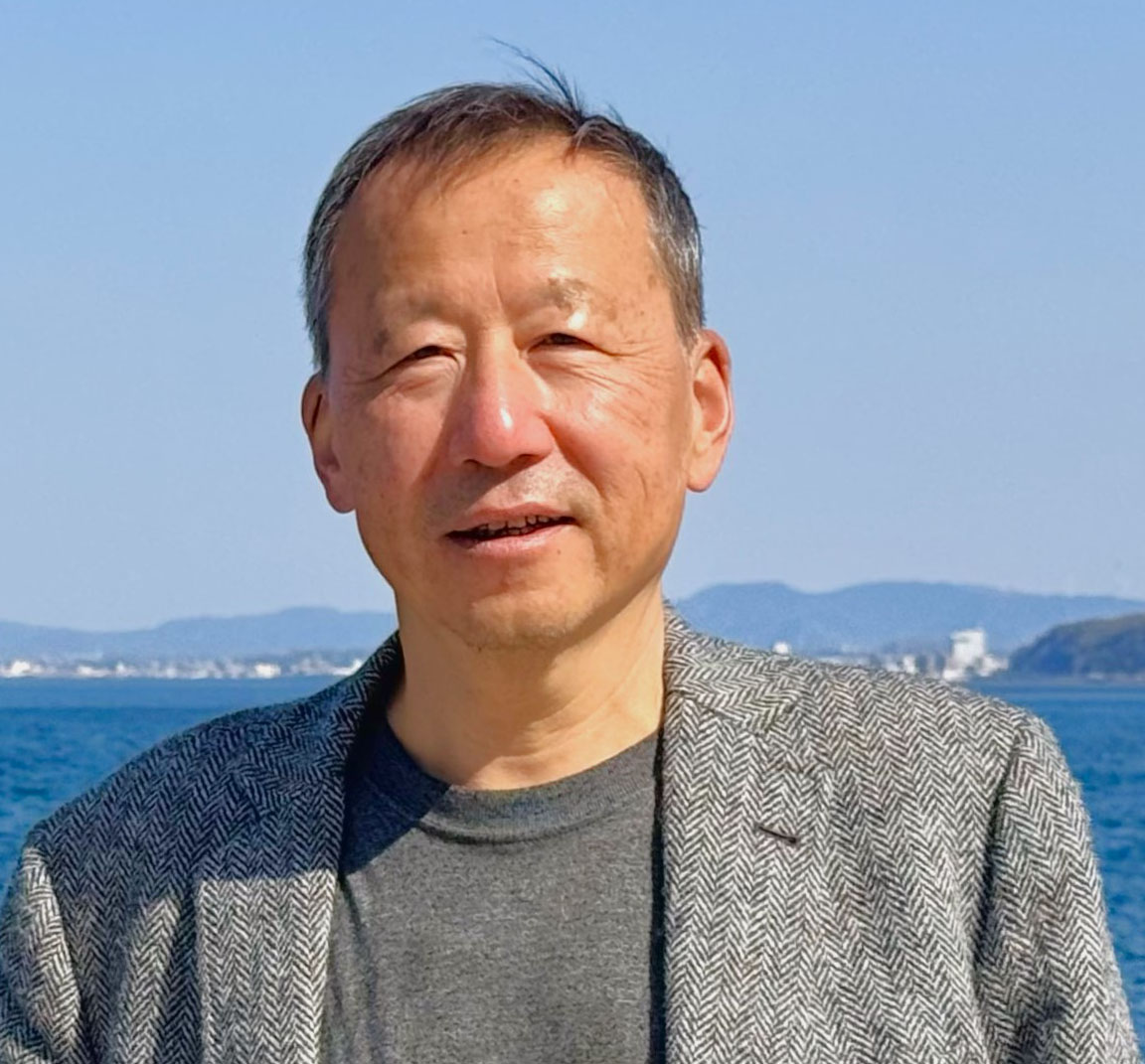
Prof. Yoshihiro Hamaguchi
Professor of Macroeconomics at Hannan University, Osaka, JapanSpeech Title: A Review of the Impact of Digitalisation, Big Data, and AI in Society 5.0 on the Four Major Hypotheses and Income Inequality
Abstract: The concept of sustainable development has permeated the world, with citizens, businesses and governments uniting under the SDGs to tackle environmental issues such as the climate crisis. However, the intensification of natural disasters caused by climate change continues, while environmental destruction and widening income disparities driven by globalisation also advance. Consequently, the prospects for coordinated environmental measures between developed and developing nations are becoming increasingly uncertain. The forthcoming Society 5.0, driven by digitalisation, big data, and AI, holds promise for reconciling economic development with social challenges, while also harbouring potential to contribute to solving environmental problems. These cutting-edge technologies may offer new perspectives on long-debated environmental economics concepts: the environmental Kuznets curve, the resource curse, Porter's hypothesis, the pollution haven hypothesis, and income inequality. This review prioritises papers with high citation counts in influential journals from 2015 to 2025 to outline research trends and present future challenges. Through a narrative and literature-based review, it aims to grasp how digitalisation, big data, and AI are altering existing prominent hypotheses, thereby providing direction for theoretical research and social practice.
Keywords: Digitalisation, Big Data, AI, Environmental Kuznets Curve, Resource Curse, Porter Hypothesis, Pollution Escape Hypothesis, Income Inequality.
Biography: Dr.Yoshihiro Hamaguchi received his PhD from Osaka University in March 2020 and currently serves as Professor of Macroeconomics at Hannan University, Osaka, Japan. His research aims to identify the mechanisms of sustainable development, utilising macroeconomic theories of economic growth and analytical methods from international and political economics. His research to date has elucidated how environmental policies can lead to pollution reduction and economic growth through innovation and he has applied his findings to the pollution haven hypothesis, sustainable tourism and sustainable finance. He has received several research grants from the Japan Society for the Promotion of Science (JSPS), reported his research at numerous peer-reviewed international conferences and published in the Journal of Macroeconomics, Tourism Economics, Transport Policy, Frontiers in Marine Science, China & World Economy, Environment, Development and Sustainability, Journal of Environmental Management, among others. Some of these papers were commended for obtaining the highest number of citations in a year. He is currently actively pursuing collaborative research with researchers around the world.
Prof. Wei-Bin Zhang
School of International Management, Ritsumeikan Asia Pacific University, JapanSpeech Title: On Complexity of Digitalization and Management Innovation in the Light of Complexity Theory and the General Economic Theory
Abstract: Applying complexity theory and my general economic theory, I present an alternative vision for investigating uncertainty and human capital formation in the evolution of economies and businesses. First, I demonstrate the importance of modern scientific advances for understanding complex human and social phenomena. This approach enables us to understand, evaluate, and predict the possible implications of digital-based socioeconomic systems. Second, I present a general economic theory consisting of a set of formulas that treat all major economic theories, from Adam Smith, Malthus, Karl Marx, and Keynes to contemporary mainstream economic theory, as special cases within a single framework. This work shows how to analyze mechanisms and functioning of socioeconomic systems connected with digitalized networking. Finally, I will discuss how complexity theory and the general economic theory can be applied to a variety of human and social problems. In particular, I refer to the I Ching (Chinese Bible: Yi Jing) on East Asia’s way of thinking.
Biography: Wei-Bin Zhang, Ph.D. (Umeå, Sweden), has been a Professor at Ritsumeikan Asia Pacific University since 2000. He graduated in 1982 from Beijing University. He got a master’s degree and completed the Ph.D. course at the Department of Civil Engineering, Kyoto University, by September 1987. He completed his dissertation on economic growth theory in Sweden by April 1989. Since then, he researched at the Swedish Institute for Futures Studies in Stockholm for 10 years. His main research fields are complexity theory in economics (nonlinear economic dynamics, chaos theory, synergetic economics), a general economic theory, different fields of economics, ancient Chinese thought, American civilization, and the economic development and modernization of Chinese societies and Japan. He single-authorized 490 academic articles (240 in international peer-reviewed journals), 33 academic books in English by well-known international academic publishing houses available on Amazon, and two books of poetry (in Chinese) by a prominent publisher in the field. He is an editorial board member of 12 peer-reviewed international journals. He was ranked 5th in the world among 73401 registered authors in economics in NJP by August 2025 (the address below). Prof. Zhang is the editor of the Encyclopedia of Mathematical Models in Economics (in two volumes) as a part of the unprecedented global effort, The Encyclopedias of Life Support Systems, organized by UNESCO (the address below).
https://ideas.repec.org/top/top.person.anbpages.html#pzh151
ttps://www.eolss.net/outlinecomponents/Mathematical-Models-Economics.aspx

Dr. Adela Lau
Deputy Director of HKU SAAS Data Science Lab, Division of Statistics and Actuarial Science, School of Computing and Data Science, The University of Hong Kong, Hong KongSpeech Title: Future Trend of Big Data Analytics: Quantum Computing
Abstract: Quantum computing is the next evolution of computing. Many researchers have studied different algorithms and methods for quantum computing development. Some applications or researches in quantum computing including drug discovery, health science, finance, logistics, route optimization, chemistry, materials science, and cybersecurity. The keynote speech presents the basic concepts of quantum computing, and explains how to model quantum computing components into different mathematical equations, statistical models and artificial intelligence for big data analytics. The current application development, limitations, challenges and future development of quantum computing will be concluded in the speech.
Biography: Dr. Adela Lau is the Deputy Director of HKU SAAS Data Science Lab, Division of Statistics and Actuarial Science, School of Computing and Data Science of the University of Hong Kong. Dr. Lau published over 100 journal and conference papers and funded over 50 research and industrial collaboration and consultancy projects with 20 million in the area of machine learning, business intelligence, text analysis, network analysis, social media and big data analytics, AI and Mixed Reality in metaverse, intelligence applications, risk management, information system adoption, ontology/taxonomy building, business process re-engineering, portal design, knowledge management, e-learning, public/community health studies, healthcare systems and nursing clinical quality control & assessment. She gained several awards including 2026 AI+Power in Business (SME) Award (Industry), 2026 International Exhibition of Innovations Geneva Silver and Medal Awards (Applied Research and Education), 2025 best paper awards (Applied Research), 2010 NANDA Foundation Research Grant Award (USA Medical Informatics), 2009 Inaugural Teaching and Learning Showcase Award (HK PolyU), and 2007 Faculty Merit Award in Services (HK PolyU). She was the former director of Center for Business Development at Madonna University in USA, and the co-director of the Center for Integrative Digital Health at Hong Kong Polytechnic University (PolyU). She led the IT team for healthcare product innovations and commercial products. Dr. Lau was an active committee member of Knowledge Management Research Center at PolyU and Data Science Center at Hong Kong University of Science and Technology (HKUST), in which she initiated and developed the industrial applied-research consultancy projects. She was also the UG coordinator (program directorship) of the Risk Management and Business Intelligence Program at HKUST, the co-director of MSc in Data Science and UG Applied AI programs in HKU, and the director of Data Science program. Her program leadership experience includes leading, executing, promoting, and coordinating program works of curriculum design, enrichment programs, and administration across schools of business, science, computing, and engineering. She was also several university-level and school-level committee members in program accreditation and quality assurance, student exchange and enrichment programs, civil and community services, university IT infrastructure and technology and innovations, and research integrity board. Her major contributions cover the areas of Data Science, Applied AI, Informatics, and Knowledge Management. She has three HKU Spin off, Dr Adela Education Limited and Thinkify Technology Limited for AI and Metaverse education development, and ESG innovations for ESG assessment and benchmarking. The newly launched innovation applications in Dr Adela Education Limited and Thinkify Technology Limited are the FIRST Generative AI Learning Platform for Wisdom Learning.
More Speakers will be updated…